Table of contents
- Clever Small Kitchen Island Ideas: From Cramped to Cozy in 2025
- Smart Layouts for Small Kitchens
- 1\. Use a narrow kitchen island with seating
- 2\. Try a square or round island for better flow
- 3\. Consider a peninsula if space is tight
- Multifunctional Island Ideas That Work
- 1\. Add built-in storage and drawers
- 2\. Use a small kitchen island with seating and storage
- 3\. Install hidden appliances like microwaves or outlets
- 4\. Choose a convertible island that doubles as a dining table
- Design Tricks to Make Small Islands Feel Bigger
- 1\. Match island color with cabinets for a seamless look
- 2\. Use [open shelving](/timeless-kitchen-design-trends-2025) to reduce visual weight
- 3\. Add a [waterfall edge](https://aquakitchen.com/waterfall-kitchen-island-design-ideas/) for a sleek finish
- 4\. Go monochrome to eliminate visual clutter
- Creative Materials and Finishes
- 1\. Try butcher block for warmth
- 2\. Use stainless steel for a modern, easy-to-clean surface
- 3\. Mix wood tones for added texture
- 4\. Add decorative panels or trim for detail
- Movable and Vintage Options for Flexibility
- 1\. Choose a rolling island for easy repositioning
- 2\. Repurpose a vintage table or butcher block
- 3\. Use a console table as a minimalist island
- Conclusion
A Homeowner’s Guide
Clever Small Kitchen Island Ideas: From Cramped to Cozy in 2025
Small kitchen islands with seating can revolutionize even the tiniest cooking spaces. A well-proportioned island lifts these smaller kitchens into modern gathering spots. These spots have become crucial to today’s entertaining style. Small kitchen island designs work wonders without compromising function for size. They make the most of every square inch in limited spaces.
Your kitchen’s layout improves dramatically with a compact island design. A narrow kitchen island with seating becomes a stylish centerpiece that doubles as extra storage space. It creates a cozy spot for casual dining. Building your own custom island costs nowhere near what pre-fabricated models do – perfect for budget-conscious homeowners. This piece explores creative small kitchen layouts that showcase an island’s practical and visual appeal, even in compact spaces.
Smart Layouts for Small Kitchens
The right layout makes a huge difference when you have limited square footage. Your island’s shape, size, and position can transform a cramped kitchen into a space that feels open and practical.
1. Use a narrow kitchen island with seating
Narrow kitchen islands work great in small spaces while giving you all the functionality you need. A slim profile island adds workspace without blocking movement in galley or rectangular kitchens. Design experts suggest a minimum width of 2 feet and length of 4 feet even for the smallest kitchen islands.
You’ll need proper clearance around your narrow island—at least 36 inches on all sides lets people move freely. The ideal space between perimeter counters and your island’s edge should be 4 feet where possible.
Narrow islands with seating work best with these features:
-
A countertop that extends 10 inches to fit seats comfortably
-
Stools that slide completely under when not used
-
Storage built into the kitchen-facing side
Small kitchens can benefit from an island just 12-15 inches deep. This slim design gives you valuable prep space and creates a nice visual boundary for your kitchen.
2. Try a square or round island for better flow
Square or round islands often fit better in smaller spaces, though rectangular ones are more common. Square kitchen islands boost efficiency, especially those that come with extra storage and seating.
Modern small kitchens do well with square islands no bigger than 4 feet by 4 feet. These provide enough working surface and stay easy to clean and reach. Their even shape also helps people move smoothly around all sides.
Round islands are a bit different – they save space by removing sharp corners. Their curved shape naturally guides traffic flow, which helps prevent bottlenecks during cooking.
Here’s a smart tip: “I recommend using painter’s tape on the floor to help you visualize different sizes and configurations to optimize the traffic flow through your kitchen and any adjacent spaces”.
3. Consider a peninsula if space is tight
A peninsula might be your best option when there’s not enough room for a standalone island. Peninsulas connect to existing countertops or walls, usually creating an L-shape at a 90-degree angle.
Small kitchens benefit from peninsulas because they:
-
Put corner space to good use
-
Create smooth workflow with open sight lines
-
Add counter space without needing clearance everywhere
Most peninsulas run 60 to 90 inches long, matching your current countertop depth (usually 25.5 inches). Even tiny kitchens can have seating at a peninsula by extending the countertop to create an overhang.
Peninsulas naturally separate cooking and living areas—perfect for open-concept homes where you want distinct spaces. They remain popular choices for small spaces that can’t fit a free-standing island.
Multifunctional Island Ideas That Work
Small kitchens need every bit of functionality you can squeeze out of them. A small kitchen island isn’t just a workspace – it’s the heart of your kitchen that solves multiple challenges at once.
1. Add built-in storage and drawers
Space is tight, so every square inch counts. Built-in storage turns your island from a basic prep surface into a storage powerhouse. Deep, wide drawers are perfect to store dishes, linens, and even pots and pans. It’s worth mentioning that both drawers and hardware need to handle the weight if you plan to store heavier items.
These storage solutions will help you organize better:
-
Pullout shelves make everything visible and prevent lost items in deep cabinets
-
Built-in under-counter drawers create a clean, uniform look
-
Side shelving works great for items you use often or decorative pieces
The back of your island offers extra space for cabinets or open shelving if you don’t need bar seating. This overlooked spot can hold everything from cookbooks to decorative items.
2. Use a small kitchen island with seating and storage
Smart islands blend comfortable seating with practical storage. This combo is a game-changer in small kitchens because it gives you a casual dining spot without losing storage space.
Your island’s cabinets should match your main cabinetry’s style and hardware to create a unified look. The countertop needs enough overhang so stools can slide completely underneath when not used.
A Georgia kitchen shows off a clever design with apothecary-style drawers that do multiple jobs – they charge phones and store heavy Dutch ovens. These thoughtful touches turn a small island into a true multipurpose hub.
3. Install hidden appliances like microwaves or outlets
Your island can hide appliances to cut visual clutter and free up counter space. More homeowners now build microwaves into their island’s base cabinets.
Microwave drawers blend right into your countertop and open like cabinet drawers. They cost more than regular models. The island’s back side is great for mounting microwaves and wine coolers – they stay available but out of sight.
Love entertaining? A beverage fridge in your island keeps drinks handy without crowding the main fridge. Under-counter refrigerator or freezer drawers offer another smart option. They can match your cabinetry perfectly with overlay panels.
4. Choose a convertible island that doubles as a dining table
Space-saving champions will love an island that turns into a dining table. This smart solution saves money and space by eliminating the need for a separate dining area.
You could add a polished hardwood tabletop that stands out against the stone countertop, making dining and prep areas distinct. Tight spaces benefit from a slide-out table with drop-down legs – instant dining space that vanishes when you don’t need it.
Some designs feature extra-long islands with space under one end for regular dining chairs instead of bar stools. This setup works better for long meals or work sessions.
The year 2025 has seen this multipurpose trend take off. Designers say “dual-purpose kitchen islands that feel like cozy furniture but perform like functional workhorses” are becoming more popular.
Design Tricks to Make Small Islands Feel Bigger
How we see things makes a big difference in making tight spaces look bigger. Smart design tricks can make even the smallest kitchen islands look larger without losing their usefulness.
1. Match island color with cabinets for a seamless look
Your kitchen island’s match with your cabinets depends on what you want to achieve. A matching look creates unity that makes your space look bigger. The eye notices a smooth flow instead of separate pieces when your island cabinets share the same color as the ones around them. This works really well in small kitchens where breaks in design can make things feel tight.
To get that designer touch, try using slightly different shades of the same color. These subtle differences help set kitchen elements apart while keeping everything looking unified.
2. Use open shelving to reduce visual weight
Open shelves make an island look lighter and more spacious. Unlike solid cabinets that can look heavy, shelves create empty spaces that let your eyes move freely through the kitchen. This helps modest-sized islands blend in better.
Putting open shelves at the island’s end gives you storage space and a chance to show off your style. These spots work great for items you use often and let you display cookbooks or colorful dishes. The open design makes your kitchen feel bigger, which really helps when space is tight.
3. Add a waterfall edge for a sleek finish
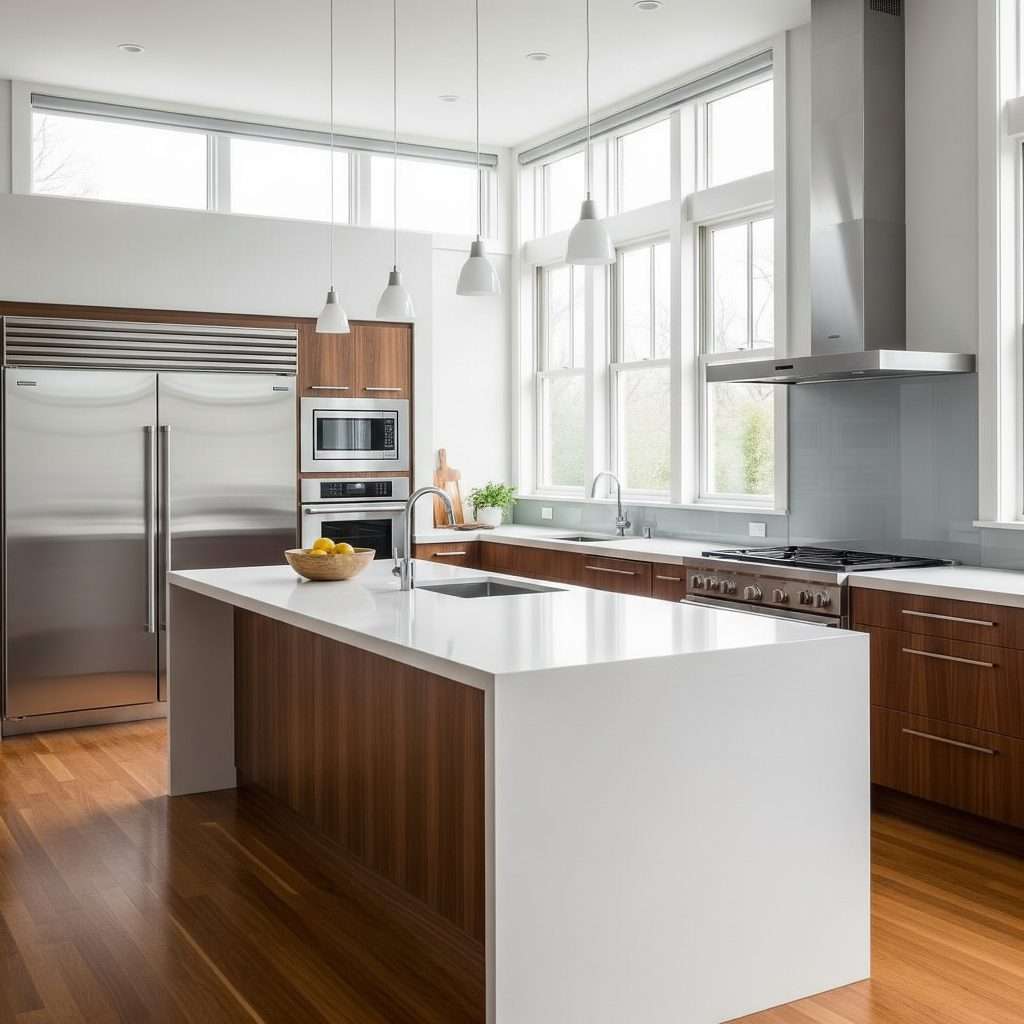
A waterfall edge—where the countertop material flows down the sides—creates an eye-catching centerpiece that adds modern sophistication. This smooth transition gets rid of visual clutter and brings a clean, modern look that makes small islands stand out.
Material that flows continuously, especially with veined stone or quartz, guides your eyes along the surface and creates movement. This design choice turns a practical kitchen piece into an architectural feature without taking up more floor space.
4. Go monochrome to eliminate visual clutter
Using fewer colors might be the best way to make a small kitchen look bigger. A monochromatic scheme—especially within one color family—gets rid of visual breaks that can make spaces feel disconnected.
Designer Kelly Cook backs this up. She points out that dark colors used on cabinets, floors, and ceilings actually make rooms feel larger by getting rid of shadows. An island that fits this color scheme helps your kitchen feel more spacious and put together. The best results come from matching your island to nearby cabinets or making a bold statement with teal or green like those seen in designer showcases.
Creative Materials and Finishes
Materials change a small kitchen island’s personality and create character through texture and finish choices. Your choice of surfaces can raise the appeal of even the tiniest kitchen workspace, ranging from natural warmth to industrial chic.
1. Try butcher block for warmth
Butcher block countertops add natural warmth to compact kitchens while meeting practical needs. These hardwood surfaces allow direct food preparation—perfect for small spaces where every inch matters.
Wood type substantially affects your kitchen’s look: maple brings subtle warmth, cherry adds a touch of color, and walnut creates rich depth. Serious cooks should think over end-grain construction that absorbs sharp blades and keeps knife edges sharper longer.
Your butcher block needs annual sealant application and quick spill cleanup. Notwithstanding that, many homeowners love butcher block because its developing patina tells their cooking story.
2. Use stainless steel for a modern, easy-to-clean surface
Stainless steel islands remind us of professional chef kitchens with their durable, sanitary surfaces. Light reflection makes them valuable in smaller spaces and visually expands tight quarters.
Natural materials like wood cabinets or marble backsplashes help balance the industrial feel of stainless steel. Matching accessories like sinks and drawer handles to your stainless surface creates visual harmony.
3. Mix wood tones for added texture
Different wood tones create depth and interest in small kitchens when combined thoughtfully. An optimized approach uses intentional contrast—lighter finishes for upper elements paired with darker tones below work well.
Matching undertones (warm with warm, cool with cool) and selecting complementary grain patterns keeps everything harmonious. Your island becomes a standout feature when you use a distinctive wood tone as a focal point.
4. Add decorative panels or trim for detail
Vertical paneling or beadboard adds character to island sides without overwhelming small spaces. Picture frame molding creates a refined, professional look.
Textured surfaces with subtle grooves boost streamlined designs while hiding joints. These details create visual harmony and give the impression of a continuous, unified space—crucial for compact kitchens.
Movable and Vintage Options for Flexibility
Small kitchens need flexible solutions that work around space limitations. You can get more versatility from movable and repurposed pieces than built-in islands.
1. Choose a rolling island for easy repositioning
Rolling kitchen islands give you workspace right where you need it. These units come with locking casters to keep them stable during use, and you can move them when you need extra floor space. Most designs come with storage drawers, shelves, and extras like spice racks or towel holders.
Small kitchens work best with rolling carts that fit under countertops when not in use. You can find models that have fold-out extensions to double your workspace or create quick dining spots.
2. Repurpose a vintage table or butcher block
Old furniture can become unique kitchen islands full of character. A French wooden butcher block adds rustic charm and gives you a solid prep surface. Tables with weathered blue-gray finishes bring personality to your kitchen and provide deep shelves to store baskets.
You can turn an antique table into an island costs under CAD 105 with basic changes—much cheaper than buying new. Adding quality casters at CAD 2.79 each makes it taller and mobile.
3. Use a console table as a minimalist island
Console tables work well as elegant and functional islands. Their slim design fits perfectly in kitchens where space matters. These tables keep the kitchen looking open while giving you extra workspace and storage.
Console tables blend naturally with your kitchen’s layout and create a subtle flow between cooking and living spaces.
Conclusion
Small kitchen islands can reshape compact spaces into functional, stylish cooking areas. No massive renovations are needed. Our exploration of small kitchen island ideas shows how smart design choices maximize both functionality and visual appeal. Yes, it is possible for even the tiniest kitchens to fit an island with the right dimensions, layout, and features.
Flexibility becomes key when space is limited. You can choose a narrow built-in island, a peninsula attachment, or a rolling cart that moves as needed. Your solution should adapt to your kitchen’s constraints. On top of that, designs that combine storage, seating, and workspace provide the greatest value in small areas.
The visual impact matters as much as physical size. Design tricks can make modest islands look larger and better integrated. These include matching cabinet colors, open shelving, waterfall edges, or monochromatic schemes. Your choice of materials—from warm butcher block to sleek stainless steel—substantially affects both the look and functionality of your island.
Space or budget constraints? Repurposed furniture offers charming alternatives to traditional built-ins. Vintage tables, butcher blocks, and console pieces can become unique islands that add character while creating essential workspace.
The ideal small kitchen island balances form and function to enhance your daily cooking. These compact yet hardworking features create gathering spots, improve workflow, and add valuable storage where needed most. Smart ideas help your small kitchen feel spacious and stylish. Limited square footage should never restrict your culinary creativity.
Written by
Amir Omidvar
Founder & Principal
Founded BRIO in 2018 to bring on-time, fixed-price guarantees to Vancouver renovations after watching too many projects spiral on his own home build.
Ready to start your kitchen renovation?
Get a free in-home estimate. We respond within 24 hours.