Table of contents
- Vancouver Multiplex Properties: Expert Guide to Evaluate Your Lot’s Potential
- What is Vancouver Multiplex Zoning and Why It Matters
- Understanding the move from single-family to multiplex housing
- Overview of R1-1 zoning and Bill 44
- What ‘Vancouver 6 units per lot’ really means
- Step 1: Check If Your Lot Qualifies for Multiplex Development
- Minimum lot size and width requirements
- Rear lane access and floodplain restrictions
- Heritage and character home considerations
- Step 2: Choose the Right Development Path for Your Property
- Scenario A: Renovate and add infill units
- Scenario B: Full teardown and rebuild
- Scenario C: Build secured rental units for 8-unit potential
- Step 3: Understand Design, Layout, and Building Rules
- Setbacks, height limits, and courtyard rules
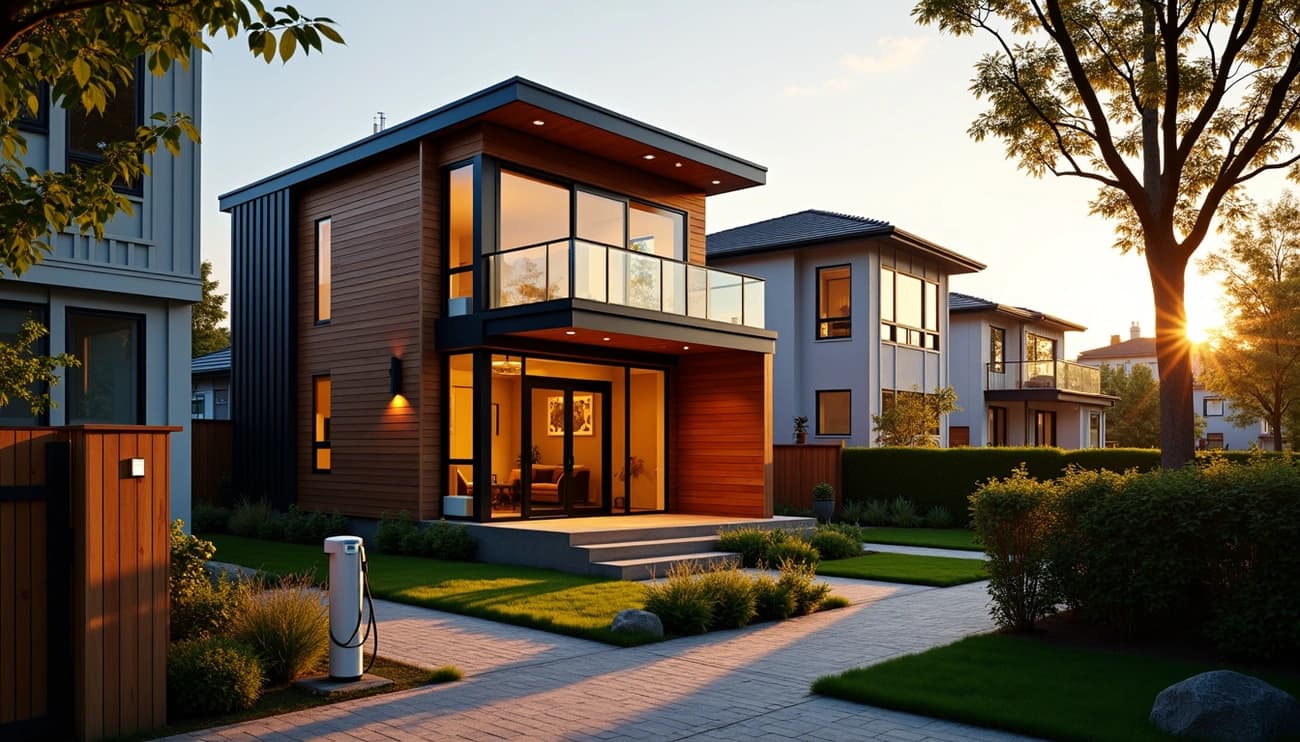
- Parking, bike storage, and EV charging
- Rainwater management and tree protection
- Net-zero and Passive House incentives
- Step 4: Financial Planning and Permit Process
- Amenity share cost and density bonus fees
- Strata vs. rental: which offers better ROI?
- Separate vs. combined permit process
- Working with architects and energy advisors
- Conclusion
Vancouver Multiplex Properties: Expert Guide to Evaluate Your Lot’s Potential
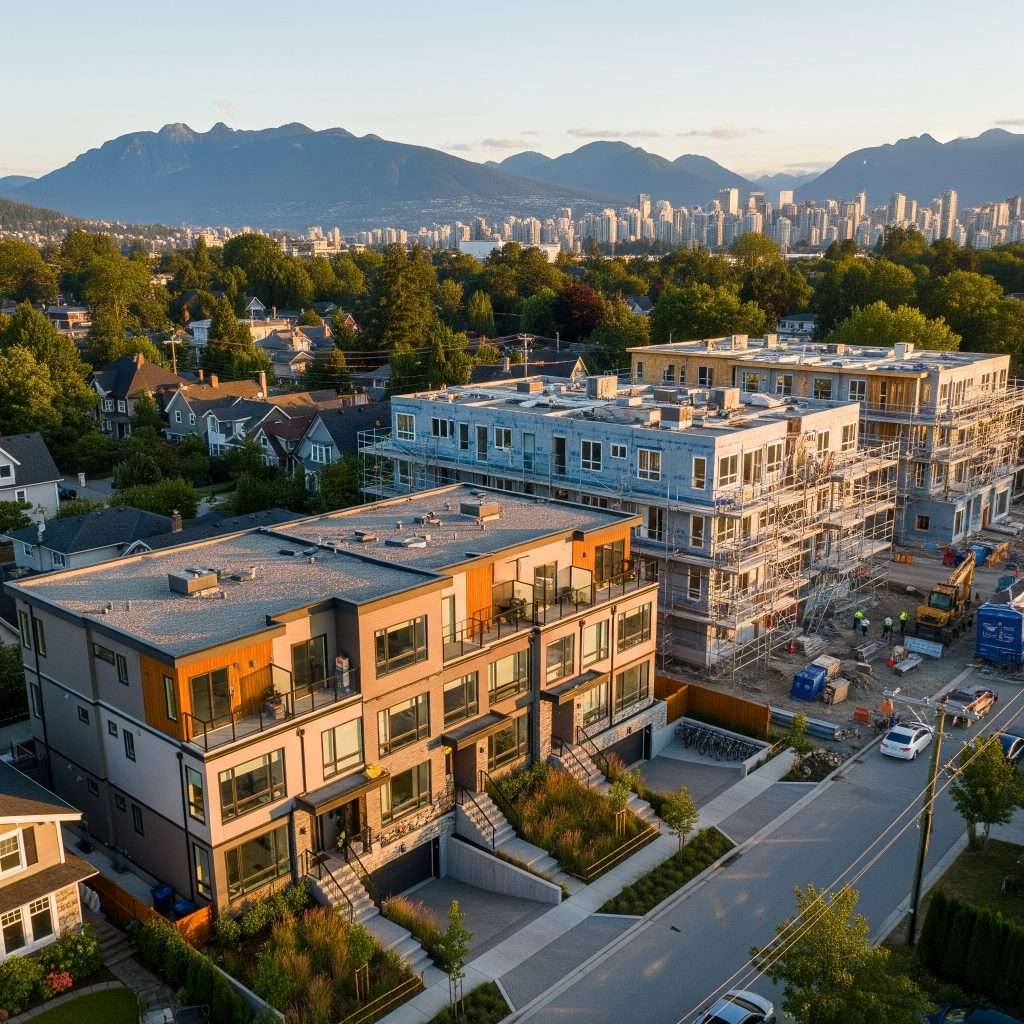
Vancouver’s residential landscape has changed with new multiplex regulations that let homeowners build three to six units where single-family homes once stood. The city received 19 applications that could create 84 new homes in the first four weeks after the rules took effect. This change gives Vancouver’s property owners a remarkable chance to expand their holdings.
The new R1-1 zoning now allows multiplexes throughout the city on lots that once permitted only detached houses. Property owners with qualifying lots can build up to six strata-titled units or eight secured rental units. These updates come from Bill 44, which makes municipalities with populations over 5,000 allow more residential units on standard lots. This piece will help you understand your property’s multiplex potential and direct you through Vancouver’s new multiplex zoning requirements.
What is Vancouver Multiplex Zoning and Why It Matters
Vancouver has made one of the most important land-use changes in decades by moving to multiplex zoning. This new way of residential development has altered the map of neighborhoods and created fresh chances for both homeowners and developers.
Understanding the move from single-family to multiplex housing
The housing scene in Vancouver no longer focuses just on single-family homes. It now offers more choices between detached houses and higher-density apartments. These “missing middle” homes help fill a crucial gap in the city’s housing options.
The Housing Vancouver Strategy pointed out the need to build the “right supply” of homes for people who live and work in Vancouver. The city wants to build better communities by letting low-density areas have multiplex development. This way, different types of households can find suitable homes.
The change started when City Council voted unanimously to allow multiplexes in areas that once had only single-family homes or duplexes. Now more people can put down roots in neighborhoods that were once only available to those who could buy detached houses.
Overview of R1-1 zoning and Bill 44
The R1-1 Residential Inclusive district schedule came into effect on October 17, 2023. It combines nine separate zones into one well-laid-out framework. This new zoning covers all areas that were RS before, which makes regulations simpler and permits easier to get.
R1-1 zoning aims to “enable a variety of small-scale housing options while retaining the single lot character of the area”. People can now choose from multiple dwellings (multiplexes with up to 6 units, or up to 8 rental units), duplexes, and single detached houses.
Bill 44 supports these changes across British Columbia. Local governments must now allow more small-scale multi-unit housing (SSMUH) in existing low-density zones. Bill 44 mandates that cities with at least 5,000 people must allow up to four units on a standard residential lot, and up to six units near public transit.
What ‘Vancouver 6 units per lot’ really means
‘Vancouver 6 units per lot’ shows the maximum number of strata units now allowed on qualifying lots. Several factors determine what’s possible:
- Lot size matters: You need at least 557 m² to build multiple dwellings with 6 units
- Rental gets a bonus: Properties can have up to 8 units if they’re all non-stratified rental homes
- Lot width affects capacity: Lots wider than 49.5 feet can have up to 6 strata units or 8 rental units
- Floor space ratio increases: Rental units can increase the maximum floor space ratio from 0.70 to 1.00
The city also has “density bonus provisions.” Developers must pay fees for public amenities, offer below-market ownership units, or make all units purpose-built rentals.
Property owners now have a great chance to increase value. A standard lot that once held just one home can now house multiple families. Recent data from 2024 shows that much of Vancouver’s residential sales went to buyers planning multiplex development.
This change creates housing that fits between single-family homes and larger apartment buildings. This gentle density approach offers more housing choices while keeping the neighborhood’s character intact. It strikes a balance between meeting housing needs and preserving community spirit.
Step 1: Check If Your Lot Qualifies for Multiplex Development
Your first task in planning a multiplex project should be checking if your property meets the requirements. The new R1-1 zoning regulations in Vancouver don’t allow multiplex development on all lots. Let me show you what makes a property eligible for this type of development.
Minimum lot size and width requirements
Your lot’s dimensions will determine how many units you can build. Vancouver’s property requirements for multiplex development need specific width and area measurements:
- For 3-4 units: Your lot must be at least 10 meters (32.8 feet) wide with a minimum site area of 306 square meters (3,293.8 square feet)
- For 5 units: The minimum site area increases to 464 square meters (4,994.5 square feet)
- For 6 units: You’ll need a lot at least 15.1 meters (49.5 feet) wide with a minimum site area of 557 square meters (5,995.5 square feet)
- For 8 units: This option is available only for secured market rental developments on lots meeting the 557 square meter requirement
These minimum requirements are set in stone – your property must meet both width and area criteria to qualify for the desired number of units. Most Vancouver lots come in either 33-foot or 50-foot widths, though their depths can vary quite a bit.
Rear lane access and floodplain restrictions
Your property needs proper access and must avoid certain environmental restrictions to qualify.
Multiplex-eligible lots need vehicle access from the back of the site. This means your property should have:
- Access to an open lane
- A location on a corner with an open or dedicated lane
- Double-fronting status (streets on both sides)
Double-fronting properties should have parking access on the quieter street to avoid traffic issues on busier roads. The development pattern should match the neighborhood, with houses facing one street and garages facing the other.
Properties in Vancouver’s Designated Floodplain can’t be developed as multiplexes. These areas include regions south of SW Marine Drive, Kits Point, and spots near Locarno Beach in Point Gray. You can check Vancouver’s floodplain map through the city’s open data portal to see if your property falls in these zones.
Heritage and character home considerations
Heritage status plays a vital role in eligibility:
Properties with heritage-designated buildings, interiors, or landscapes can’t be demolished or turned into multiplexes. Heritage designation appears on the property title as legal protection against demolition or major changes.
The difference between heritage-designated properties and those listed on the Vancouver Heritage Register (VHR) matters. Properties on the register without legal designation can still become multiplexes.
Character homes built before 1940 tell a different story. These sites can be demolished and rebuilt as multiplexes. They might also qualify for the Character House Incentives Program, which allows multiple units through renovation instead of demolition.
Character house sites in R1-1 zones have specific tree requirements. Lots less than 15.1 meters wide need one tree in the front yard, while wider lots need two trees.
Check these eligibility criteria before spending money on architectural plans or permit applications. If your property doesn’t qualify for multiplex development, Vancouver’s housing programs offer many other density options.
Step 2: Choose the Right Development Path for Your Property
The next big decision comes after confirming your lot’s eligibility – choosing the right development approach. Vancouver’s multiplex zoning offers several distinct paths based on your property’s features and what you want to achieve long-term.
Scenario A: Renovate and add infill units
Property owners with character homes, especially those built before 1940, might find renovation with infill an appealing choice. The “multiple dwelling” (multiplex) classification applies only to new construction. You can’t simply turn an existing building into a multiplex or add new structures under multiplex rules.
Properties featuring character homes can add infill buildings while updating the main structure. This method maintains the neighborhood’s charm and increases density. Heritage-designated properties that must be preserved have this as their only option to create more housing.
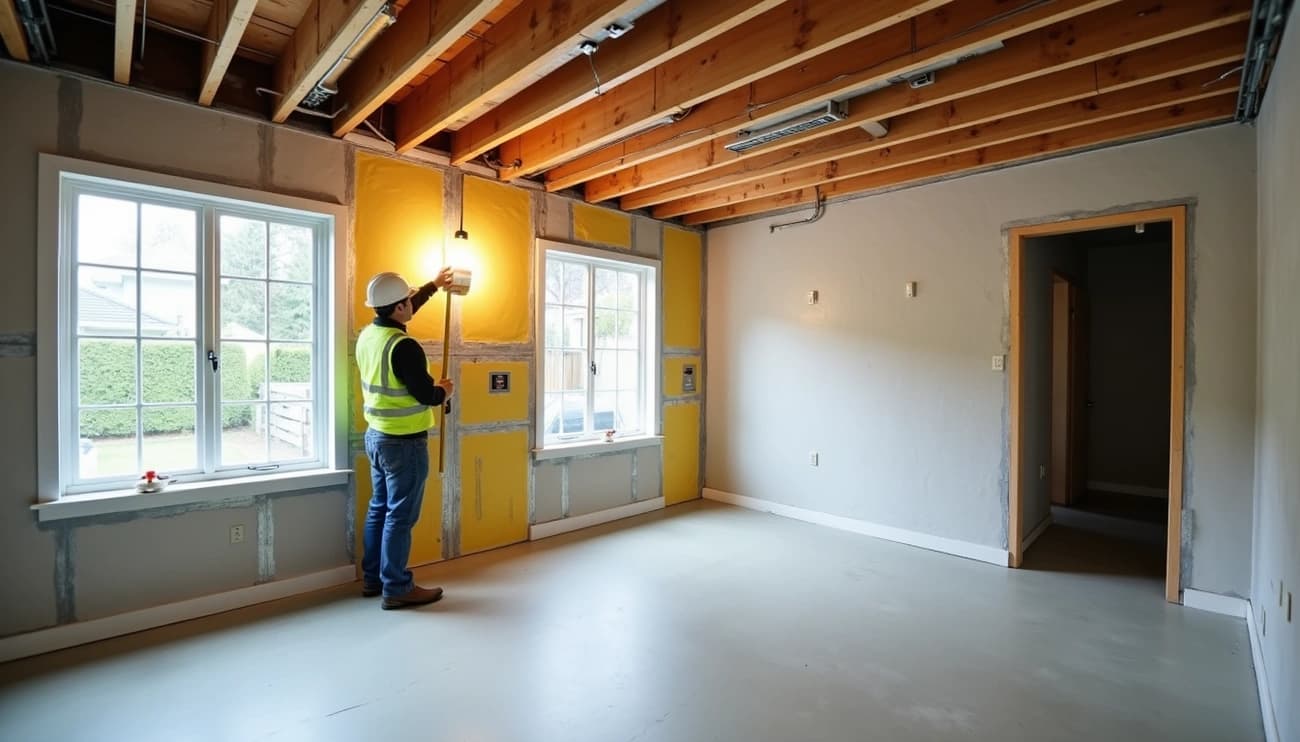
The renovation permit process needs a design professional who prepares detailed plans and submits applications to review. Each building on the site needs separate permits.
Scenario B: Full teardown and rebuild
A complete redevelopment gives you more flexibility and could bring higher returns. The city received 40 R1-1 multiplex development permit applications between mid-November 2023 and January 2024. This shows strong early interest from property owners.
You have three ways to reach the maximum 1.0 FSR density in full redevelopment:
- Develop units as strata-titled and pay a cash density bonus contribution
- Develop strata units and provide one below-market home ownership unit
- Develop all units as secured market rental
Early applications mostly show courtyard designs with front and rear buildings and above-grade construction (no basements). This shows how flexible building configurations can be.
Scenario C: Build secured rental units for 8-unit potential
The rental-only path lets you build up to 8 units on qualifying lots (minimum 557 m²), while strata projects max out at 6 units. This option requires all units to meet “residential rental tenure” standards secured through a housing agreement.
The registered owner can live in one unit while others generate rental income. This path eliminates the density bonus contribution needed for strata developments. You trade potential sale profits for long-term rental returns and two extra units.
Vancouver wants more rental stock, so secured rental projects might get expedited processing and additional incentives like parking reductions. Property owners who plan to keep their investment long-term could see better returns with this rental-focused approach compared to quick strata sales.
Step 3: Understand Design, Layout, and Building Rules
Your project’s success depends on understanding Vancouver’s multiplex design rules after choosing your development path. These rules cover everything from where you can place buildings to what sustainability features you need.
Setbacks, height limits, and courtyard rules
Your multiplex design must follow specific boundary clearances: front yard setback of 4.9m (16 ft), side yard setback of 1.2m (4 ft), and rear yard setback of 10.7m (or 0.9m if there’s a rear building). Main structures can’t exceed 11.5m (3 storeys), though the third floor comes with size limits. Rear buildings max out at 8.5m (2 storeys).
You’ll need lots at least 100 feet deep with 20 feet between buildings to create courtyards. Larger lots work best with this setup when you want to maximize your unit count.
Parking, bike storage, and EV charging
Vancouver has eliminated minimum parking requirements for multiplex projects. Most developers still add parking spaces because buyers want them. The city doesn’t allow underground parking because it costs too much and raises environmental concerns.
Your bike space requirements will change based on unit count and size. You’ll typically need 1.5-3 spaces per unit depending on how big your units are. Each pair of bicycle spaces must have an electrical outlet.
Rainwater management and tree protection
New multiplexes must have rainwater management systems by July 1, 2025. Your lot width determines the size of detention tanks—they range from 2.7 to 3.75 cubic meters. These systems help you prevent flooding and sewer problems.
Tree rules focus on your front yard. You’ll need a permit to remove any tree wider than 20cm. The city requires new trees too: one tree for narrow lots under 50 feet and two trees for wider ones.
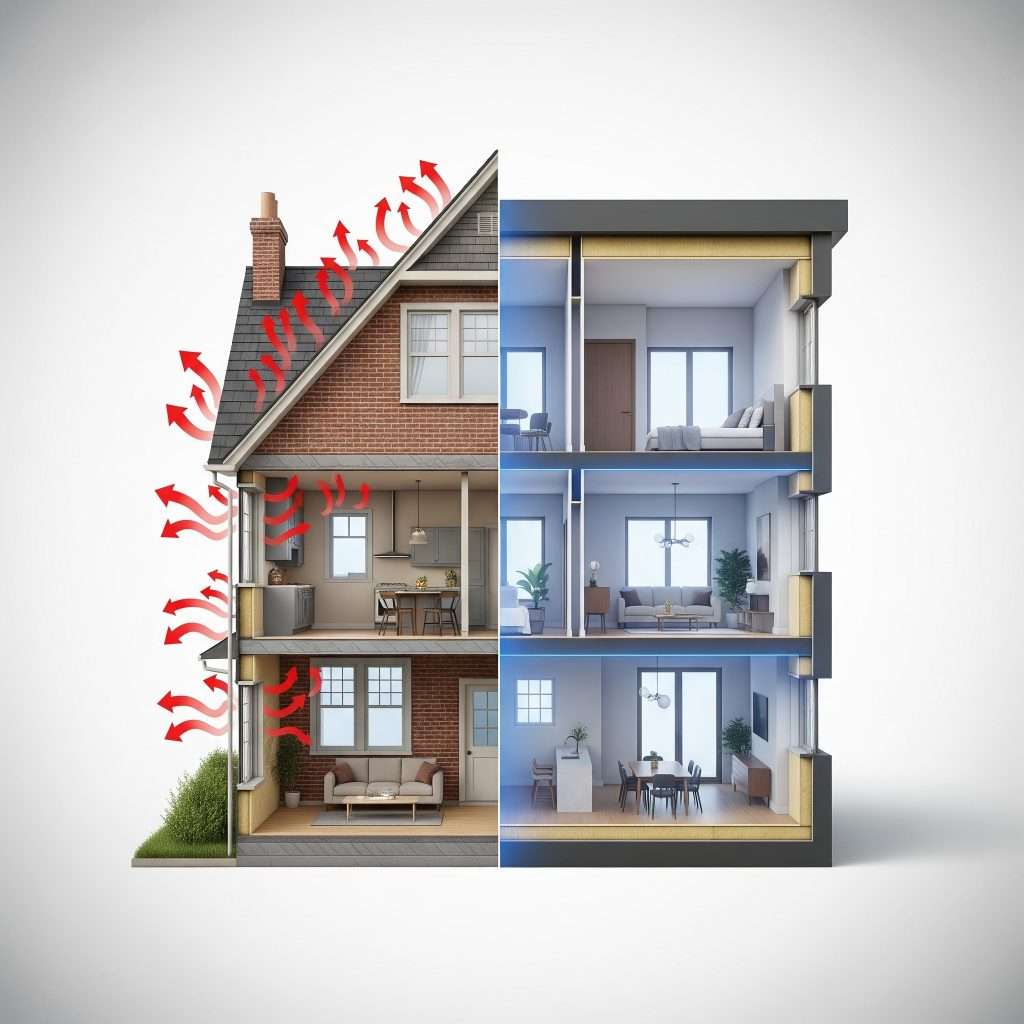
Net-zero and Passive House incentives
The city rewards environmentally-friendly construction with substantial bonuses. Net-zero or Passive House certified buildings get:
- Extra 2 feet in height and depth
- 19% additional floor area
- Balcony projections into setbacks
Your project must include a Qualified Net Zero Builder or a Certified Passive House Consultant/Designer to qualify. These bonuses improve your project’s economics while helping the environment.
Step 4: Financial Planning and Permit Process
Money plays a crucial role in determining if your multiplex project can work. You’ll make better decisions about your property’s development potential by knowing the costs, returns, and permit requirements.
Amenity share cost and density bonus fees
Density bonus contributions kick in when you go beyond 0.70 FSR. These fees cost about CAD 90.57 per buildable square foot and can reach up to CAD 163,023 for a 6,000 sq ft lot. You’ll need to pay these fees when Stage 1 Building Permit is issued. The good news is Social Housing and Secured Market Rental Housing developments don’t have to pay these contributions.
Strata vs. rental: which offers better ROI?
Rental developments bring different returns compared to strata projects. A fourplex rental property typically brings in monthly revenue around CAD 19,507 (CAD 4,876 per unit) with a 4.2% capitalization rate. Your multiplex development could achieve these numbers:
- 8-12% annual cash-on-cash return
- 15-20% total ROI including appreciation
- 7-10 year payback period
Rental development stands out because it allows 8 units instead of 6 and eliminates density bonus fees.
Separate vs. combined permit process
Vancouver will introduce an efficient Development Building Permit process in early 2025. This cuts approval times by half. Small projects (3-4 units across 2 buildings) in R1-1, RT-7, or RT-9 zones can use this option. Larger projects still need separate applications – you’ll need a development permit first, then a building permit.
Working with architects and energy advisors
Your multiplex project needs the right professionals. Besides architects, you’ll need energy advisors to review building envelopes, mechanical systems, and air-tightness. Your team must include a Qualified Net Zero Builder or a Certified Passive House Consultant to get sustainability incentives.
Conclusion
Vancouver’s multiplex zoning has changed how property owners can get the most value from their land. Property owners who were once restricted to single-family homes can now build between three to six strata units or up to eight rental units on suitable lots. Homeowners now have new ways to develop their property or sell it to developers at premium prices.
Your lot’s qualifications need a thorough review before starting any multiplex project. The property’s size, width, lane access, and heritage status will determine its development potential. A typical 33-foot lot could support three to four units. Larger 50-foot lots might accommodate the maximum six strata units or eight rental homes.
Each development path comes with its own benefits. The neighborhood’s charm stays intact when character homes are kept and infill buildings are added to increase density. Complete redevelopment offers more flexibility and could bring higher returns. The secured rental option lets you build eight units instead of six and removes density bonus fees, making it great for long-term income.
Your project’s success depends on smart design that fits Vancouver’s rules. The project must work within height limits, setbacks, tree preservation, and green requirements. Net-zero and Passive House options need more money upfront but offer bigger density bonuses and save money over time.
Money matters need careful planning. Density bonus fees can affect your project’s bottom line, though rental developments don’t have these costs. Working with qualified architects, energy advisors, and experienced builders will help you through the complex permit process and maximize your property’s potential.
Vancouver’s multiplex transformation has just begun. More projects will move from paper to reality, and better ways of doing things will emerge and change neighborhoods citywide. These new rules have created more housing opportunities and could boost property values throughout Vancouver, whether you want to develop now or just understand your property’s future worth.
Written by
Amir Omidvar
Founder & Principal
Founded BRIO in 2018 to bring on-time, fixed-price guarantees to Vancouver renovations after watching too many projects spiral on his own home build.
Ready to start your project?
Get a free in-home estimate from BRIO. We respond within 24 hours.